Field Notes · Comfort & Preparation
Silk and Linen for Overnight Field Trips: Gingerlily and Libeco Compared
The day may belong to birdsong, distant horizons, or the slow appearance of stars. But on an overnight field trip, the night matters too. A familiar, comfortable layer can make an unfamiliar room—or a carefully planned camp—feel more restful before the alarm calls you back outdoors.
When considering Gingerlily silk and Libeco linen, start with what each fabric feels like, how it travels, and what its care asks of you. Neither can guarantee a good night’s sleep. Both can help make the practical rituals around sleep feel more considered.
Why sleep comfort belongs in the field plan
Field trips often begin before sunrise. A birding group may set out while dew still beads on grass; a wildlife watcher may spend the day waiting quietly at a hide; a stargazer may stay awake long after a city’s lights have disappeared behind the hills. The hours outdoors can be absorbing, but they can also be demanding. Rest is part of the preparation that makes attention possible.
Travel bedding rarely means bringing an entire bedroom. It may mean packing a light pillowcase, a sleep layer, or a small textile that helps you settle in an unfamiliar place. In a lodge or guesthouse, that item can add a familiar texture to the bedding already provided. On a more remote trip, any sleep textile needs to fit the conditions, the packing plan, and the limits of your sleeping system. A household fabric is not a replacement for a suitable sleeping bag or insulated mat in cold conditions.
The right choice therefore depends less on which material sounds most luxurious and more on the specific trip. Consider climate, accommodation, how you travel, whether you can wash and dry items, and how sensitive you are to heat or texture. Gingerlily silk and Libeco linen invite different expectations, but the experience of a particular product will also depend on its weave, weight, construction, and care instructions.
Silk and linen: two different kinds of comfort
Silk is often chosen for its smooth hand and light feel. Against the skin, that smoothness can seem especially welcome after a dusty drive, a windy viewpoint, or a long day carrying binoculars. It folds down readily, which can make silk appealing when space is limited. Its delicate character, however, asks for thoughtful handling: rough zippers, damp storage, and careless washing can be harder on fine textiles than on sturdier everyday fabrics.
Linen begins with a more textured, relaxed impression. Its visible weave and natural creases are part of its familiar character, not necessarily signs that it has been packed badly. Many travelers appreciate linen for the way it feels airy and unstudied. It may suit someone who prefers a less slippery surface and does not mind a fabric that looks lived in. Its packed bulk varies with the item’s size and construction, so “linen” alone cannot tell you how much room a particular piece will take.
Both materials can feel pleasant, but neither is universally cooler, softer, or more comfortable in every situation. Skin sensitivity, room temperature, weave density, and personal preference all matter. If possible, handle the actual textile before committing to it as a travel essential. Product descriptions and fiber names offer useful clues, but touch is personal—and a material that feels soothing at home may behave differently in a warm cabin or a chilly room.
For an overnight trip, think of comfort as a combination: the fabric against your skin, the bedding underneath, the air around you, and the routine that helps you wind down. A familiar pillowcase might be more useful than a full set of sheets. For another traveler, the greatest comfort may be keeping the pack light and leaving nonessential bedding at home.
What the brand names can—and cannot—tell you
Gingerlily is associated here with silk, while Libeco is associated with linen. Those names can help frame the comparison, but they do not by themselves establish that a particular item is designed as travel bedding. Check the exact product description before packing: its intended use, measurements, fabric details, and care directions matter more than a brand-level assumption.
The available product information for the brands should not be treated as proof that every item shares the same weight, finish, or washing requirements. Even within one fiber category, a compact accessory, a pillowcase, and a sheet are not interchangeable. For overnight birding, wildlife, or stargazing, match the item to the job: something intended for laundry organization is useful for separating clothes, but it is not a substitute for a sleep layer.
This distinction is particularly important when planning for remote conditions. A silk or linen accessory may add comfort and organization, but it is not technical insulation. If the forecast is cold, wet, or changeable, rely on accommodation information and suitable outdoor sleep equipment. Treat a decorative or home-textile item as a comfort extra, not as protection from exposure.
A practical comparison for overnight field trips
| Consideration | Silk, including Gingerlily options | Linen, including Libeco options |
|---|---|---|
| First impression | Smooth and light to the touch; may appeal to travelers who like a sleek surface. | Textured and relaxed; may appeal to travelers who prefer a more substantial, natural-feeling weave. |
| Packing approach | Often easy to fold compactly, though the exact result depends on the item and its construction. | Can crease and may take more room depending on the item; check its dimensions and thickness. |
| Care planning | Follow the specific label carefully and protect it from abrasion, moisture, and rough handling. | Follow the product’s care instructions; expect a more relaxed appearance if creases form in transit. |
| Best question to ask | Will I handle and wash this delicate-feeling item carefully on this trip? | Do I enjoy the texture, and am I comfortable with a casually creased look? |
This is a planning comparison, not a promise about every product bearing either name. A particular item’s specifications should settle practical questions such as dimensions and cleaning method. When in doubt, take the manufacturer’s care label as the final word.
When silk may be the better fit
Silk may suit the traveler who wants a light, smooth textile and is willing to give it a little protection. On a short stay in a lodge, a pillowcase or other small personal layer can slip into luggage without taking the place of essential field equipment. It can also feel like a quiet link to home: a familiar texture at the end of a day spent adapting to new light, sounds, and surroundings.
That convenience comes with a handling routine. Keep silk away from gritty gear, sharp clips, and damp items. A separate clean pouch helps prevent friction and keeps the textile from being crushed against equipment. Avoid leaving it in a sealed, damp bag after a rainy day or a humid night. If it becomes soiled, do not improvise with a strong detergent or an unfamiliar wash cycle; check the garment or textile’s care directions first.
On a trip where laundry facilities are uncertain, it is worth asking whether the item can realistically be cared for as intended. A fabric that feels special but requires a process you cannot manage may be less practical than a simpler alternative. Travelers who are careful with their packing and have predictable accommodation may find that trade-off easy. Those moving between vehicles, trails, and campsites may prefer to minimize delicate extras.
When linen may be the better fit
Linen can appeal to travelers who value texture, an easygoing appearance, and a material that does not need to look perfectly pressed to feel at home. For a stay where the textile will be used indoors and packed only once or twice, a few creases may be of little consequence. The choice can feel especially natural for someone who prefers tactile fabric over a slick, smooth finish.
Its practicality still depends on the specific item. A larger textile can occupy meaningful space, and a thick or generously sized piece may not be a sensible addition to a tightly packed field kit. Before traveling, fold it as you would on the trip and see how much room it takes. If you are traveling by foot or carrying camera equipment, weigh that extra volume against the benefit you expect to gain.
Care is another part of the decision. Linen is not automatically maintenance-free, and different products may have different washing and drying requirements. If your itinerary includes a single night away, laundering may not matter. On a longer journey, check whether the fabric can be cleaned and dried in the time and conditions available. A textile packed away before it is fully dry can develop an unpleasant odor, whatever its fiber.
Packing textiles without muddling the field kit
Good organization can matter as much as the fabric. Separate sleeping items from damp outer layers and muddy footwear. Keep clean textiles away from binocular straps, lens caps, snacks, and batteries. A small system of clearly assigned bags—one for clean sleep items, another for used clothing—reduces rummaging when you arrive tired and want to settle quickly.
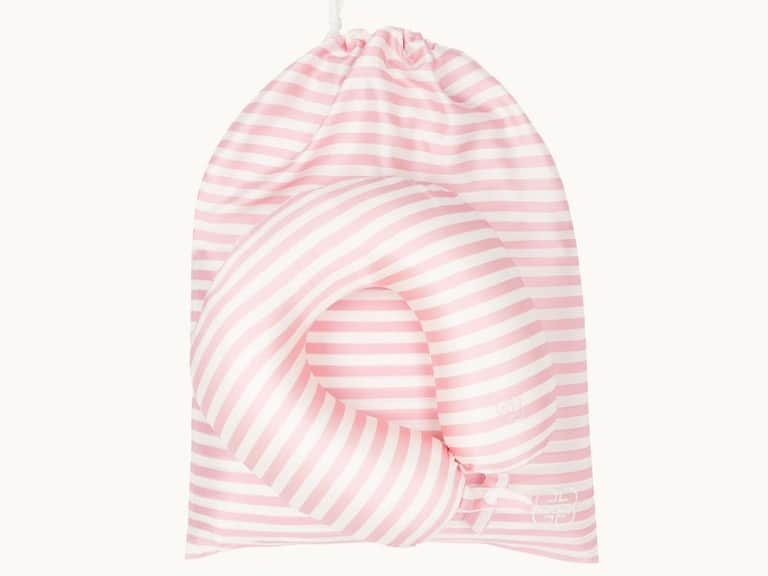
A silk laundry bag can serve a practical role in that system by separating worn clothes from clean garments. One available Gingerlily option is the Silk Laundry Bag - Pink & Ivory Stripe, described as a 100% Mulberry silk travel laundry bag with a 19 Momme fabric weight and a 21-by-16-inch size. Its stated care instructions call for a delicate machine-wash cycle at no more than 30°C, air drying, and cool ironing. Check the product listing and care guidance before use, particularly if your trip involves limited laundry access.
Because it is a laundry bag, its role is organization—not bedding or insulation. That distinction helps keep a packing list honest. If the aim is to sleep more comfortably, choose an item made for that purpose; if the aim is to contain worn clothing, a laundry bag may be useful. For a lightweight trip, one well-chosen item often serves better than a collection of accessories that compete for space.
On the journey home, allow damp or dirty textiles to air out as soon as conditions permit. Keep a clean sleep layer in its own compartment rather than using the same pocket for dusty clothes. At night, place small essentials in a consistent location so that a headlamp or notebook can be found without disturbing a sleeping companion.
Match the fabric to the kind of observing
Birding before dawn
Early birding rewards a calm start. If you are staying in a guesthouse or shared cabin, pack only the sleep textile you know you will use. A light personal layer may make the bed feel more familiar, while compact organization keeps the morning routine quiet. Set out clothing and optics before turning in; silk or linen cannot make up for searching for a field notebook in the dark.
Wildlife watching across changing conditions
Wildlife trips can involve dusty roads, wet grass, and long periods of stillness. Keep personal textiles away from muddy gear and follow the accommodation’s guidance about bedding. For remote or cold-weather travel, prioritize appropriate technical sleep equipment and layers. A household textile is an optional comfort, not a substitute for warmth or weather protection.
Stargazing after dark
Stargazing often means returning late, when a quiet, simple setup is welcome. Pack items that are easy to locate without switching on bright lights. A familiar pillow layer can be comforting in fixed accommodation, but avoid bringing anything that will become damp if stored in a cold vehicle or exposed to nighttime condensation. Keep fabric dry and let it air before packing it away.
Travel photography and mixed itineraries
Photographers often balance clothing, batteries, lenses, and protection for delicate equipment. Make textiles part of the packing plan rather than an afterthought. A laundry bag can keep worn clothes separate, while a sleep item should be stored where camera gear cannot snag or crush it. If the itinerary changes each night, choose for portability and uncomplicated care over an elaborate home-like setup.
A small checklist before you choose
- Confirm the setting: Are you staying in a lodge, a vehicle, a tent, or a shared bunkroom?
- Check the actual item: Verify its purpose, dimensions, construction, and care directions rather than relying on the fiber name alone.
- Consider the weather: Bring suitable technical sleep equipment where conditions require it; silk and linen accessories are not insulation systems.
- Test your preference: Notice whether you prefer a smooth surface or a more textured one.
- Plan for cleaning: Decide how you will keep the item dry, separate, and clean during the trip.
- Pack with purpose: If an item has no clear job, leave it behind and save room for essentials.
A useful choice is one that improves the trip without complicating it. You may discover that the best sleep upgrade is not a full textile set but a clean pillowcase, an eye mask, or simply a better plan for keeping damp gear separate. The goal is not to recreate home outdoors. It is to create enough comfort to greet the next day alert and ready to observe.
The quieter luxury of being prepared
There is a particular hush to the hours before dawn. A room is still dark; somewhere beyond the window, the landscape is beginning to change. The best travel comforts are often modest: a dry layer, a packed bag that opens easily, a familiar texture, and the knowledge that the morning’s essentials are ready.
Gingerlily silk and Libeco linen represent distinct textile experiences, but the right choice is personal and practical. Silk may appeal if you value a smooth, light feel and can protect it. Linen may suit you if you welcome its texture and relaxed look. In either case, inspect the specific product and plan for its care. For field trips, comfort works best when it supports the purpose of the journey: spending more time noticing the world, and less time wishing you had packed differently.